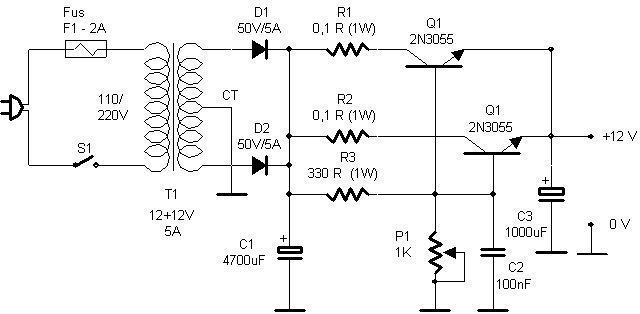
12V 5A Power Supply Using 2 × 2N3055 Transistors
This high-current power supply provides a regulated 12V DC output at up to 5A. The circuit uses two 2N3055 power transistors in parallel as pass elements, providing high-current capability with a simple linear regulator design. It is suitable for battery charging or powering high-current 12V DC loads.
Power Supply Requirements
- Input: AC voltage stepped down to ~15–18V using a suitable transformer.
- Rectification: Full-wave bridge rectifier to convert AC to unregulated DC.
- Filtering: High-capacitance electrolytic capacitors to reduce ripple and smooth DC voltage.
Key Components
- 2 × 2N3055 Power Transistors: Connected in parallel to provide high-current pass capability.
- Voltage Regulator IC (optional, e.g., 7812): Provides reference voltage for stable 12V output.
- Filter Capacitors: Smooth the rectified DC and reduce ripple under high load.
- Resistors: Set base biasing and current sharing between the two 2N3055 transistors.
- Transformer: Steps down mains AC to a voltage suitable for regulation to 12V DC.
- Bridge Rectifier: Converts AC to DC for the pass transistors.
Circuit Operation
- The AC mains voltage is stepped down by the transformer to ~15–18V AC and rectified by the bridge diodes to DC.
- Filter capacitors smooth the rectified DC voltage.
- The 2N3055 transistors act as pass elements, controlled by a reference voltage (e.g., from a 7812 IC) to regulate the output to 12V DC.
- Resistors in the emitter circuits ensure balanced current sharing between the two 2N3055 transistors.
- The result is a stable 12V output capable of supplying up to 5A continuously.
Key Features
- High-current 12V DC output (up to 5A)
- Simple linear regulation using 2 × 2N3055 power transistors
- Optional 7812 reference for precise voltage regulation
- Low ripple and stable output suitable for high-current loads or battery charging
- Robust and reliable design for hobby or lab use
Construction Notes
- Mount both 2N3055 transistors on adequate heatsinks using thermal paste for proper cooling.
- Use thick wires or busbars for high-current output connections to minimize voltage drops.
- Ensure the emitter resistors are properly sized to balance current between the transistors.
- Verify transformer and rectifier ratings to handle 5A output safely.
- Test the power supply gradually with increasing load before connecting sensitive devices.
- Include fuses or circuit breakers for overload and short-circuit protection.